Malala arrives in Pakistan to visit flood-stricken areas_我的网站
一 | Karachi, Oct 11 (UNI) Nobel laureate Malala Yousufzai arrived in Karachi on Tuesday to visit the flood-stricken areas of Pakistan, media reports said.
Yousufzai is being accompanied by her parents during the trip amid strict security.
Nobel laureate and girls' education campaigner is visiting the flood-affected areas to raise international awareness regarding the devastation caused by climate change in the South Asian nation.
Pakistan witnessed more than usual monsoon showers this season that sparked countrywide flooding and left a third of the nation underwater, causing damage to standing crops and roads and rail tracks in Sindh and Balochistan.
Yousufzai is expected to extend assistance from the Malala Fund for flood relief, according to Geo news reports.
In the first week of September, the Malala Fund issued an emergency relief grant to the International Rescue Committee (IRC).
The IRC will use the funds to provide psychosocial support to girls and women in flood-hit Sindh and Balochistan.
The funding will also be used to deliver emergency education services to ensure girls continue their education.
The assistance from the Malala Fund will help repair and rehabilitate ten damaged government schools for girls.
This is the second time that the 2014 Nobel peace prize winner has visited Pakistan.
In 2014, Yousafzai became the youngest recipient of the Nobel Peace Prize at the age of 17 in recognition of her efforts for children's rights.
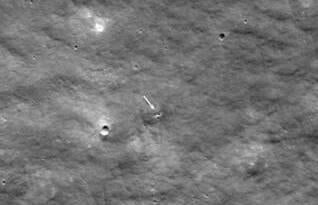
UNI GNK。 Russia's Luna-25 probe likely left a 33-foot-wide crater on the surface of the moon last month when it lost control and crashed down, NASA said Thursday, revealing images that show the suspected impact site.Russia's first moon mission in 47 years ended in failure on August 19 when the Luna-25 probe smashed into the moon after a thruster firing went awry, cutting off communications and putting the spacecraft on the wrong orbital path, according to Roscosmos, the Russian space agency.NASA's Lunar Reconnaissance Orbiter (LRO) spacecraft captured images last week of what the U.S. space agency described as a "new crater" after Roscosmos published an estimate of where the probe had struck.During the descent to the surface on August 19, the Russian spacecraft Luna-25 experienced an anomaly that caused it to smash into the moon's surface. The faiint arrow in this NASA image shows where the agency believes the probe made impact. NASA's Goddard Space Flight Center/Arizona State University "Since this new crater is close to the Luna-25 estimated impact point," NASA wrote in a statement, "the LRO team concludes it is likely to be from that mission, rather than a natural impactor." Moscow has set up a commission to investigate exactly why Luna-25 crashed.The failure was a major disappointment for the Russian space program, which was attempting to up its game amid renewed interest in the moon's southern polar region, where ice deposits may exist in permanently shadowed craters. Ice could offer future space missions a way to produce breathable air, water and even hydrogen rocket fuel.
The Russians have had little success with independent space exploration since the Luna-24 robot landed on the moon in 1976. It scooped up about six ounces of lunar soil and returned it to Earth in Russia's third successful robotic lunar sample return mission.Twelve NASA astronauts walked on the moon a half century ago in the agency's Apollo program, but no Russian cosmonauts ever made the trip. Russia's only previous post-Soviet deep space robotic missions, both targeting Mars, ended in failure.
Former NASA astronaut breaks down India's moon landing04:34Luna-25 was an attempt to pick up the torch and put Russia back into a new space race of sorts, as the U.S., China, India, Japan and the private sector all plan multiple moon missions that could lay the foundations for lunar bases and eventual flights to Mars.India's Chandrayaan-3 Vikram lunar lander made a historic touch-down near the moon's south pole just several days after the Russian probe crashed. It delivered a lunar rover that has already sent back data from soil samples.